Solo founder
Explain the offer, ideal customer, proof points, and the one action visitors should take.
Get a focused launch site that makes the value proposition easy to scan.
base44 appsPrompt to publish
The Base44 website builder turns a plain-language idea into a working site structure, then gives you a practical way to refine pages, content, and interactions without starting from a blank canvas.

Before you build
A strong first prompt does not need technical language. It needs enough direction for Base44 to understand the audience, purpose, content, and action the site should support.
Explain the offer, ideal customer, proof points, and the one action visitors should take.
Get a focused launch site that makes the value proposition easy to scan.
base44 appsUse Base44 to create a responsive first pass before applying your own visual system and editorial judgment.
Move from discovery notes to a reviewable prototype without rebuilding common sections by hand.
base44 templatesDescribe services, opening hours, location details, contact preferences, and the tone customers should feel.
Create a useful web presence with clear calls to action and less dependency on technical setup.
base44 pricingTurn a feature brief into a public-facing landing page with sections for use cases, benefits, objections, and signup intent.
Give stakeholders something concrete to review while the messaging is still being shaped.
base44 appsThese related guides help you decide whether to build a full site, explore ready-made patterns, or focus on a more app-like experience.
From brief to site
Treat the first generation as a structured draft, not a final answer. The fastest results come from making one clear request, inspecting the output, and refining one concern at a time.
Name the audience, page goal, required sections, tone, visual direction, and primary call to action. Include real copy or examples where they matter.
Check the navigation, hierarchy, mobile behavior, forms, links, and factual details before polishing colors or decorative elements.
Ask for one change at a time, such as tightening the hero copy, simplifying the menu, adding a testimonial section, or improving contrast.
Read the site as a first-time visitor and confirm that every important route leads toward a clear, working next step.
Know the edges
A prompt-driven website builder can remove repetitive setup, but it does not replace decisions about content quality, compliance, or the details that make a business credible.
If the brief says only “make a modern website,” the result may have familiar layouts and interchangeable copy.
WorkaroundProvide a defined audience, offer, tone, required sections, examples you like, and a single conversion goal.
Base44 can organize a message, but it may not know your precise claims, terminology, legal wording, or brand voice.
WorkaroundSupply approved facts and edit every customer-facing statement before publishing.
A polished interface does not guarantee that every form, data connection, authentication step, or external service behaves as intended.
WorkaroundTest important flows with realistic inputs and confirm each integration separately.
The first output is a useful direction, not proof that spacing, accessibility, responsive behavior, and visual hierarchy are finished.
WorkaroundReview on multiple screen sizes and use focused refinement requests instead of broad rewrites.
Pick your build mode
Base44 works best when you choose the right level of control for the job. Start with speed for exploration, then add specificity wherever the visitor experience depends on it.
 Speed
Speed
1
Best when you need to validate an offer, announce a service, or give a small project a credible starting point. Describe the audience and conversion goal, then refine the sections that carry the most weight.
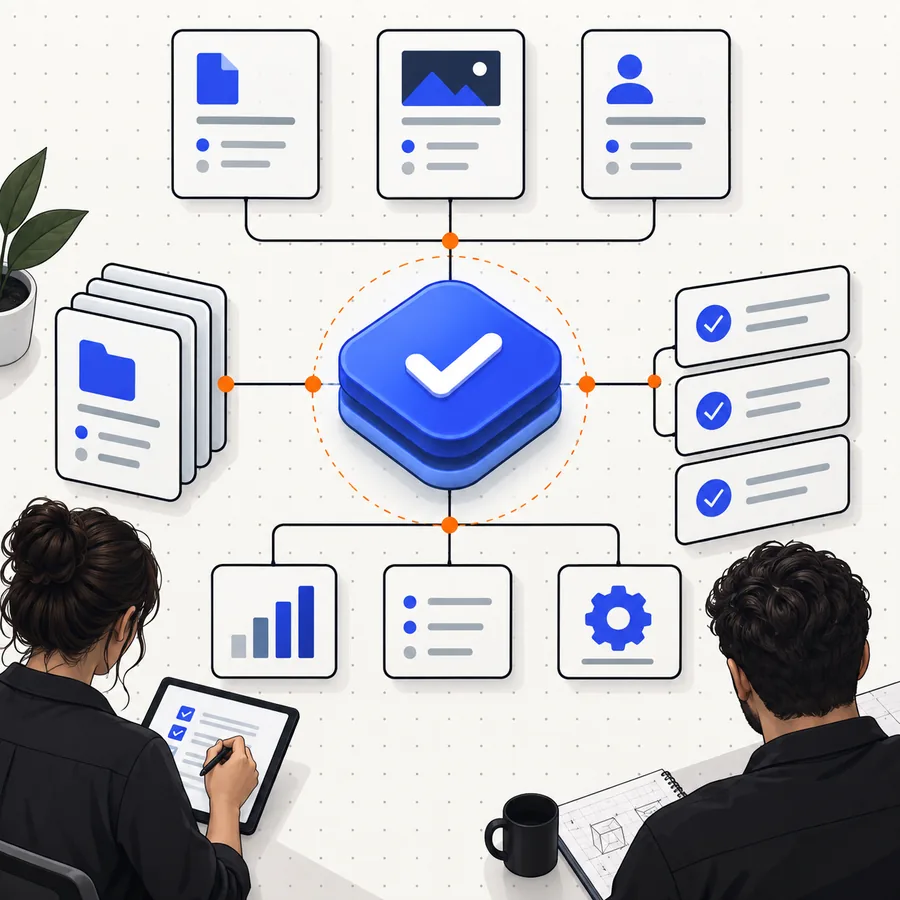 Control
2
Best when the information architecture is familiar but the details are specific. Begin from a suitable structure, replace generic content with your own material, and tune the navigation around real visitor questions.
 Depth
Depth
3
Best when the page needs more than static information, such as a calculator, intake flow, directory, or internal tool. Define the states and user actions explicitly so the build can be evaluated as a working experience.
Bring a real brief, a real audience, and a real next step. Base44 can give you a strong starting structure; your review makes the result accurate, useful, and ready for the people you want to reach.
Build my websiteCommon questions
It is used to turn a written description into a working website concept with structured pages, content, and interactions. It can be useful for landing pages, business sites, prototypes, and more interactive product experiences.
Yes, the workflow is designed around plain-language instructions rather than requiring you to write the initial code yourself. You should still review the generated content, responsive layout, forms, and integrations before publishing.
Include the audience, purpose, key sections, tone, visual direction, required content, and the action you want visitors to take. Specific examples and approved facts usually produce a more useful first draft than broad style adjectives.
It can generate a responsive site structure, but responsiveness should be tested rather than assumed. Check navigation, typography, forms, spacing, images, and calls to action on both narrow and wide screens.
It can be a practical starting point for a business website when the scope is clear and the content is reviewed carefully. Businesses with complex compliance, commerce, or integration requirements should validate those parts independently before relying on the site in production.